

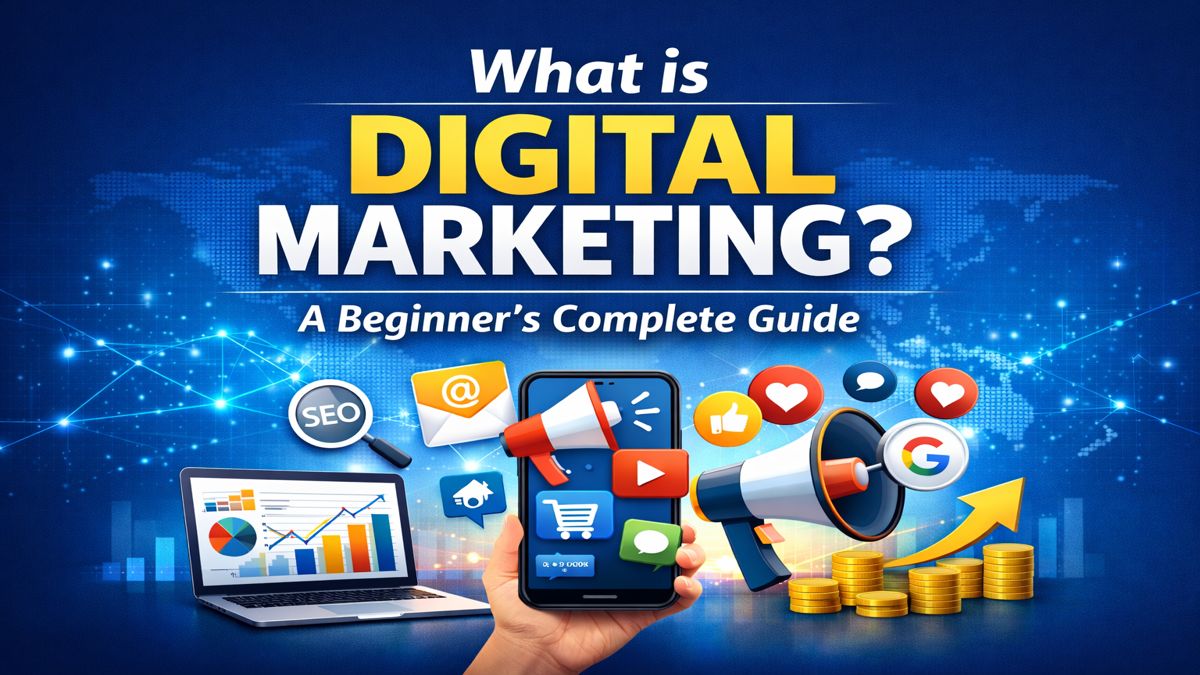
Digital marketing refers to promoting products or services using online channels such as search engines, social media, email, and websites. In today’s digital world, businesses rely heavily on digital marketing to reach their target audience, increase sales, and build brand awareness.
Key Types of Digital Marketing
Search Engine Optimization (SEO)
SEO focuses on improving a website’s visibility on search engines like Google. Higher rankings lead to more organic traffic and long-term results.
Social Media Marketing
Platforms like Facebook, Instagram, TikTok, and LinkedIn help businesses connect directly with customers through content, ads, and engagement.
Paid Advertising (PPC)
Paid ads allow businesses to instantly reach a targeted audience. Google Ads and Meta Ads are common PPC platforms.
Email Marketing
Email marketing helps nurture leads and retain customers by sending offers, updates, and personalized content.
Content Marketing
Blogs, videos, and guides educate customers and build trust over time.
Why Digital Marketing Matters
- Cost-effective compared to traditional marketing
- Measurable results
- Global reach
- Better audience targeting
Conclusion
Digital marketing is essential for modern businesses. Beginners should start with one channel, master it, and expand gradually.
Article 4: Dropshipping Business Model – Pros, Cons, and Reality
Dropshipping is an e-commerce model where sellers don’t keep inventory. Instead, products are shipped directly from suppliers to customers.
How Dropshipping Works
- You list products on your store
- A customer places an order
- Supplier ships the product directly
Advantages of Dropshipping
- Low startup cost
- No inventory management
- Location-independent business
- Easy to test products
Disadvantages of Dropshipping
- Low profit margins
- High competition
- Limited control over shipping
- Customer service challenges
The Reality of Dropshipping
Dropshipping is not a “get rich quick” model. Success depends on product research, branding, and marketing skills.
Conclusion
Dropshipping is a good starting point for beginners, but long-term success requires building a real brand.
Article 5: Freelancing vs 9–5 Job – Which Builds Real Financial Freedom?
The debate between freelancing and traditional jobs continues as more people seek financial independence.
Freelancing Explained
Freelancers work independently, offering services like design, writing, or marketing. Income depends on skills and clients.
Pros:
- Flexible schedule
- Unlimited income potential
- Skill-based growth
Cons:
- Income instability
- No fixed benefits
9–5 Job Explained
A traditional job offers fixed income and stability.
Pros:
- Job security
- Fixed salary
- Benefits
Cons:
- Limited income growth
- Fixed working hours
Which Is Better?
Freelancing offers freedom and growth, while jobs offer stability. The best choice depends on personal goals and risk tolerance.
Conclusion
Financial freedom comes from skills, not job titles. Many people combine both paths for balanced growth.
Leave a Reply